
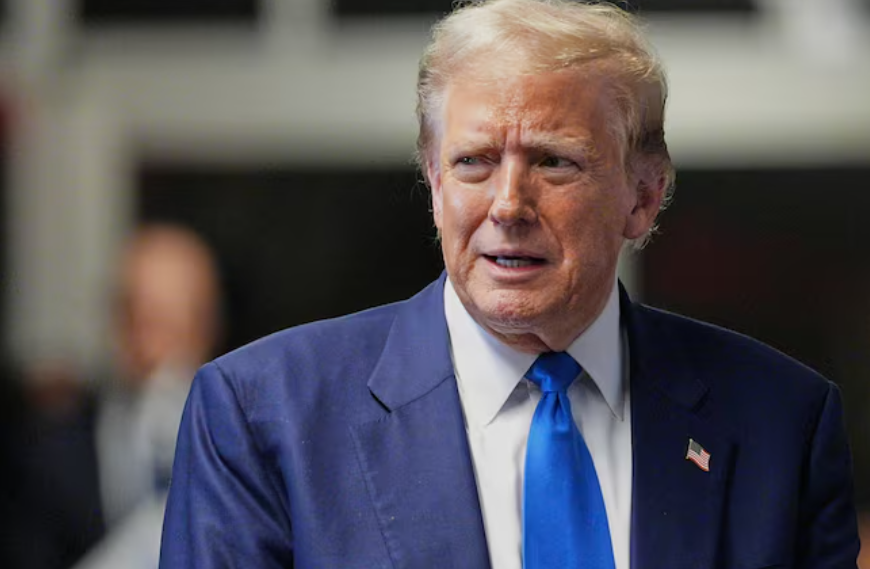
In a move that has drawn global scrutiny, the Trump administration’s proposed Board of Peace, an international body intended to oversee the ceasefire and reconstruction efforts in Gaza and potentially serve a broader peace mandate, includes a provision for nations to pay $1 billion in cash to secure permanent membership on the board, according to multiple reports based on draft charter language.
What the Proposal Says
Under the draft charter circulating among diplomats, member states would initially serve three-year terms on the board. Nations that contribute at least $1 billion within the first year could bypass the term limit and secure permanent membership.
The draft gives the board’s chairman — expected to be former U.S. President Donald Trump — significant authority over decisions, including approvals and renewals of membership.
According to U.S. officials, there is no cost to join the board for a standard three-year term, but the contribution would secure extended or permanent status and greater influence over the board’s agenda. Funds are described as intended for Gaza’s reconstruction and rebuilding efforts, although details on accountability and escrow arrangements for those funds remain unclear.
Legal and Institutional Implications
The proposal raises significant legal and governance questions:
1. Multilateral Legitimacy and the U.N. System —
The Board of Peace was initially endorsed by the United Nations Security Council in late 2025 as part of a ceasefire framework for Gaza. But critics warn that tying governance participation to contributions echoes practices that could undermine international norms on equal sovereignty and collaborative decision-making in global peace structures. World powers, including several European and Middle Eastern states, have expressed skepticism or caution about the initiative and its implications for the role of the United Nations and existing peace mechanisms.
2. Control of Funds and Oversight —
From a legal standpoint, international bodies typically must establish transparent fiduciary mechanisms to manage large contributions, particularly when funds are earmarked for reconstruction in conflict zones. Critics note that draft language gives the chairman substantial control, which could lead to questions about financial oversight, audit rights by contributors, and accountability to beneficiaries. This is especially relevant because reconstruction funds intended for Gaza are of humanitarian importance and may be subject to international humanitarian law and donor country legislative oversight.
3. Equity Among Members and Member Rights —
Permanent membership based on financial contributions departs from traditional multilateral governance norms, where equal participation rights are rooted in sovereign state equality rather than financial status. Legal scholars note that this could set a precedent for differential membership rights in international organizations that run counter to standard treaty and organizational law principles.
Diplomatic and Policy Responses
Several nations have confirmed invitations to join the board, including Canada, India, Jordan, Greece, Cyprus, Pakistan, Hungary, and Vietnam, with some reportedly willing to engage. Others — notably Israel’s government — have criticised aspects of the board’s structure, particularly its formation without close coordination on policy alignment, especially regarding security and governance in Gaza.
Meanwhile, the White House has pushed back against characterizations that nations must pay to join, calling such reports “misleading” and highlighting that permanent membership would only be attained through significant commitment to peace and reconstruction goals. (Reuters)
Broader International Law Concerns
Legal analysts predict that if the board expands its remit beyond Gaza and toward global conflict resolution, as some draft language suggests, it could intersect with international agreements and United Nations Charter principles. For example, assigning disproportionate decision-making power based on financial contribution may challenge norms around collective security, sovereign equality, and non-discrimination.
There is also the question of jurisdictional authority: unlike the U.N. Security Council, which derives its legal basis from the U.N. Charter and binds member states under international law, the Board of Peace’s legal standing would depend on its charter accepted by participant nations and domestic implementation of its commitments. The absence of a robust treaty process could limit enforceability and invite scrutiny in international legal fora.
What Comes Next
With world leaders deliberating over invitations and many awaiting formal charter publication and financial governance details, legal observers caution that the $1 billion provision could either become a paper clause with little practical uptake or a lightning rod for transnational governance reform debates going forward.
The initiative’s trajectory will likely hinge on how transparently and equitably the board addresses questions of funding, oversight, and member rights in its finalized legal framework.