
An Immigration and Customs Enforcement (ICE) officer shot and killed a Minneapolis motorist on Wednesday, January 7, 2026, during an expanded federal immigration enforcement operation.
The incident has triggered multiple investigations and already intensifying legal tensions between the Trump administration and local officials in Minnesota.
The shooting occurred during a traffic stop in a residential area south of downtown Minneapolis, near long-established immigrant-owned markets and roughly a mile from the site where George Floyd was killed by police in 2020. The 37-year-old woman was transported to Hennepin County Medical Center with life-threatening gunshot wounds to the head and later died, according to a statement from the City of Minneapolis.
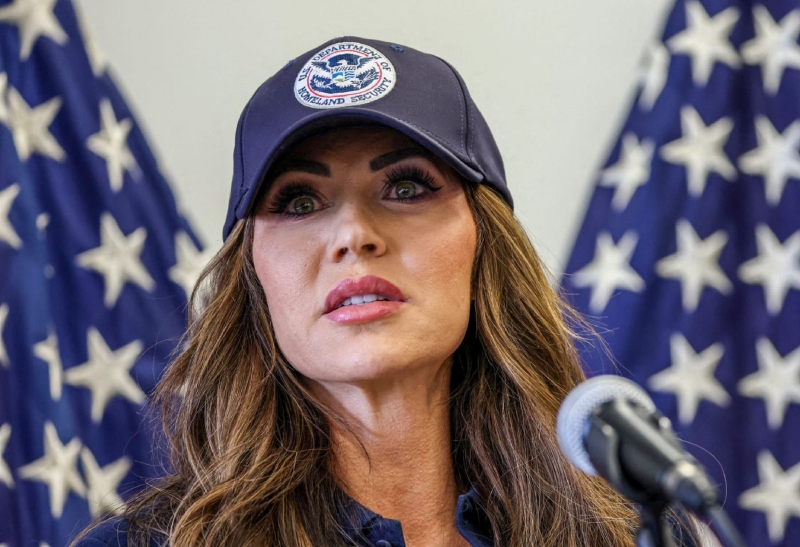
Homeland Security Secretary Kristi Noem, speaking at a news conference in Minneapolis, defended the officer’s actions, describing the shooting as justified under federal use-of-force standards.
“Our officer followed his training, did exactly what he’s been taught to do in that situation,” Noem said, adding that while any death is a “tragedy,” the facts support the officer’s response.
Noem alleged that the woman attempted to block ICE officers with her vehicle, harassed them earlier in the day, and tried to run over a federal officer. She said the officer was struck by the vehicle, hospitalized, and later released. The FBI is leading the investigation, she confirmed.
Earlier in the day, Noem—speaking in Texas—characterized the incident as an “act of domestic terrorism” against ICE officers, a claim that drew immediate backlash from Minneapolis officials.
Conflicting Accounts Raise Legal Questions
Minneapolis Mayor Jacob Frey sharply rejected the federal government’s framing of the incident, calling the self-defense narrative “garbage” and condemning the deployment of more than 2,000 federal officers to Minneapolis and neighboring St. Paul as part of the administration’s immigration crackdown.
“They are not here to cause safety in this city,” Frey said. “What they are doing is causing chaos and distrust.”
Minneapolis Police Chief Brian O’Hara offered a more restrained account, declining to say the woman was attempting to harm anyone. He told reporters that the woman was blocking traffic on Portland Avenue when a federal officer approached her vehicle on foot. As the vehicle began to move, at least two shots were fired before the car crashed off the roadway.
Notably, O’Hara did not corroborate federal claims that the driver intentionally targeted officers, highlighting a key factual dispute likely to shape the legal outcome of the case.
State, Federal Probes Underway
Minnesota Department of Public Safety Commissioner Bob Jacobson said the state will investigate the shooting in coordination with federal authorities, urging caution against early conclusions.
“This is an investigation that is also in its infancy,” Jacobson said. “Any speculation about what has happened would be just that.”
The shooting took place in the congressional district of Democratic Rep. Ilhan Omar, who condemned the killing as “state violence,” not legitimate law enforcement, further escalating the political and legal fallout.
Broader Legal Implications
The case underscores unresolved legal tensions surrounding federal immigration enforcement in major U.S. cities, particularly where local leaders oppose aggressive ICE operations.
While ICE officers operate under federal authority, use-of-force incidents are subject to constitutional scrutiny under the Fourth Amendment, as well as internal Department of Homeland Security policies.
Legal analysts say the conflicting accounts from federal and local officials could complicate determinations of whether the shooting met the legal threshold for justified deadly force. The outcome of the FBI-led probe, along with any civil litigation, could carry significant implications for federal enforcement tactics and federal–local cooperation nationwide.