
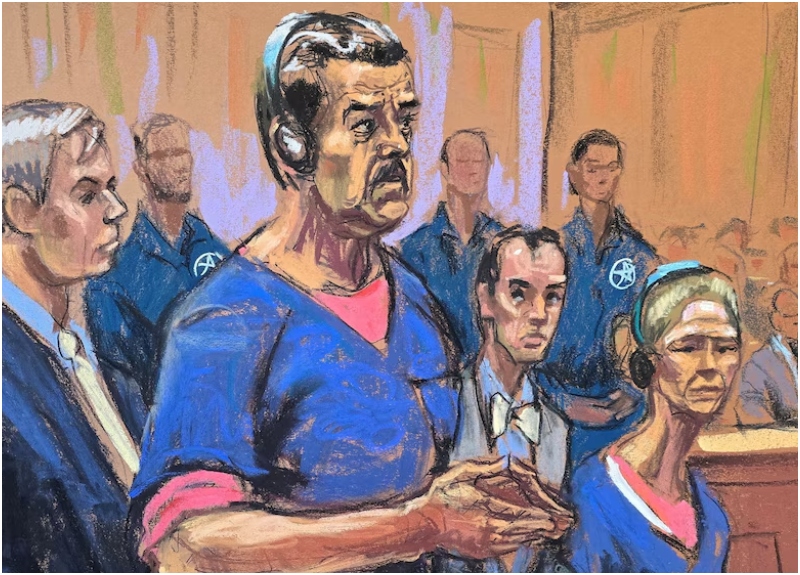
The most striking moment of Nicolás Maduro’s arraignment in a U.S. federal court on Monday, January 5, 2026, was not the heavy security or the list of sweeping criminal charges read into the record—it was the direct, tense dialogue between the judge and the deposed Venezuelan leader.
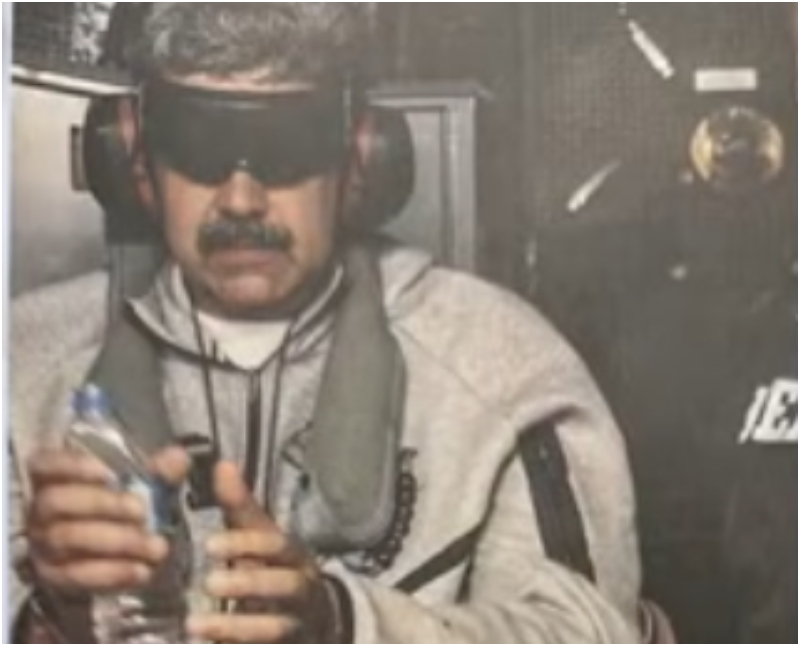
Escorted from detention in handcuffs by armed U.S. Drug Enforcement Administration officers, Maduro and his wife were flown by helicopter to Manhattan and transported to the courthouse in an armored vehicle.
Inside the courtroom, Maduro appeared with shackles on his ankles and wore headphones to follow the proceedings through a Spanish interpreter.
The judge opened the session by emphasizing judicial neutrality, telling Maduro that the court’s role was to ensure a fair proceeding. What followed was a courtroom exchange that laid bare the clash between U.S. criminal law and Maduro’s assertion of political legitimacy.
The judge began formally.
Judge: “Are you Nicolás Maduro Moros?”
Maduro: “I am the president of Venezuela.”
The response immediately set the tone of the hearing, with Maduro refusing to acknowledge his status as a former or deposed leader.
As the court moved forward, Maduro escalated his claims.
Maduro: “I consider myself a prisoner of war. I was captured at my home in Caracas.”
The court did not engage the claim at that stage, proceeding instead with the legal formalities. A shortened version of the indictment was then read, outlining charges of narco-terrorism, conspiracy to import cocaine into the United States, drug trafficking, and related offenses.
A deputy for the judge continued the questioning.
Deputy: “Have you seen the indictment?”
Maduro: “I have seen it, but I have not read it.”
Deputy: “Have you discussed it with your lawyer?”
Maduro: “Partially.”
Then came the pivotal exchange—the moment that formally placed Maduro in the U.S. criminal justice system.
Deputy: “How do you plead?”
Maduro: “I am innocent. I am not guilty of anything that is mentioned here.”
Maduro’s attorney followed by informing the court that the defense was not requesting bail at this time, though the option may be pursued later.
The judge ordered Maduro and his wife to return to court on March 17, 2026, and ruled that they remain in custody pending the next hearing.
Legal analysts say the dialogue itself may become central to future proceedings, as Maduro’s assertions of presidential authority and claims of unlawful capture point toward potential jurisdictional and international law arguments.
For now, the courtroom exchange is the clearest record of what transpired: a former head of state, in shackles, declaring his innocence—while the U.S. justice system formally set its case in motion.
Swift Military Operation
According president Donald Trump, Nicolás Maduro’s ousting on January 3 followed a swift, tightly coordinated international operation that unfolded in the early hours of the day, bringing an abrupt end to his grip on power.
The operation reportedly combined diplomatic pressure, defections within Venezuela’s security establishment, and a rapid enforcement action linked to sealed U.S. indictments, leaving Maduro isolated as control of key state institutions shifted away from him.
By the time the operation concluded, Maduro had been taken into custody and transferred out of the country under heavy guard, marking a dramatic turning point after years of political stalemate, sanctions, and contested legitimacy.
Supporters of the move described it as the culmination of long-running efforts to hold him accountable, while critics warned it set a far-reaching precedent for how international power can be exercised against sitting—or self-declared—heads of state.