
Senior U.S. lawmakers are threatening legal and congressional action against the Department of Justice (DOJ) after the Trump administration released only a partial and heavily redacted set of documents related to the late convicted sex offender Jeffrey Epstein, despite a new federal law requiring full disclosure.
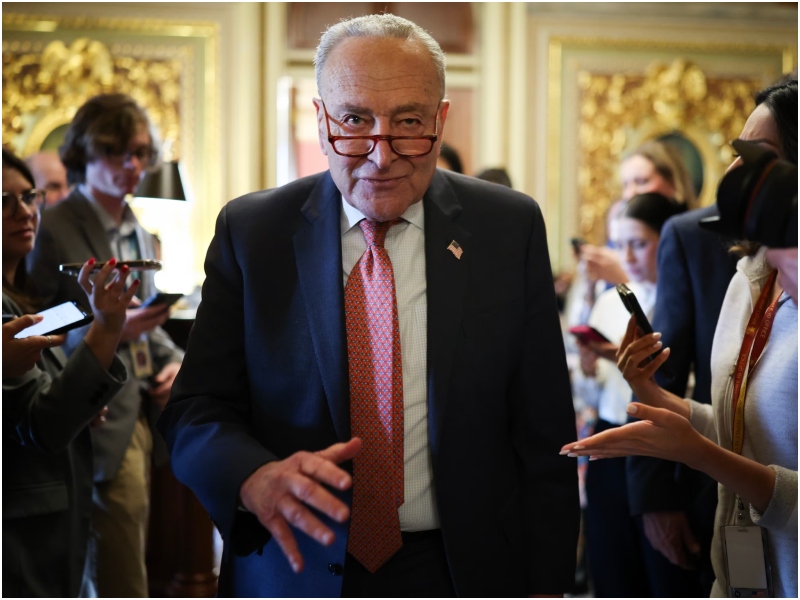
At a press conference in Washington, D.C., on December 16, Senate Minority Leader Chuck Schumer (D–New York) accused the DOJ of violating the Epstein Files Transparency Act, which mandated the public release of unclassified materials tied to Epstein, his associate Ghislaine Maxwell, and others connected to the case within 30 days.
“The law Congress passed is crystal clear: release the Epstein files in full so Americans can see the truth,” Schumer said in a statement. “Instead, the Trump Department of Justice dumped redactions and withheld evidence. That breaks the law.”
Schumer announced he is introducing a Senate resolution directing the chamber to pursue legal action against the DOJ for what he described as a “blatant disregard of the law.” He further alleged that the partial release amounted to a cover-up aimed at shielding President Donald Trump and other powerful figures from scrutiny.
Bipartisan Pushback
Pressure is also mounting from both sides of the aisle. Representative Ro Khanna (D–California) and Representative Thomas Massie (R–Kentucky)—the bipartisan sponsors of the Epstein Files Transparency Act—said they are considering contempt proceedings against Attorney General Pam Bondi.
“The quickest and most expeditious way to get justice for these victims is to bring inherent contempt against Pam Bondi,” Massie said during an appearance on CBS’s Face the Nation. Khanna confirmed that discussions are underway to draft such a resolution.
Khanna added that lawmakers are also exploring provisions that would allow a congressional committee to review DOJ redactions to determine whether they meet the narrow exemptions permitted under the law, such as protecting victims’ identities or preserving grand jury secrecy.
DOJ Defends Redactions
The Justice Department began releasing documents on Friday, the statutory deadline, but warned in advance that not all files would be made public at once. Deputy Attorney General Todd Blanche said the department is conducting a careful review to prevent harm to victims.
“We are looking at every single piece of paper that we are going to produce, making sure that every victim—their name, their identity, their story—is completely protected,” Blanche said in an interview with Fox News. He noted that additional documents would be released in the coming weeks.
However, critics argue that the initial release failed to meet the law’s intent. Lawmakers and survivors say the documents contained no significant new information, largely repeating material already in the public domain.
Survivors Voice Outrage
Survivors of Epstein’s abuse were among the most vocal critics. Liz Stein, an Epstein survivor and anti-trafficking advocate, said the DOJ’s approach undermined years of calls for accountability.
“For survivors, this deadline was not symbolic,” Stein said. “The DOJ’s partial, staggered release violates federal law and risks shielding the individuals and institutions who enabled this abuse.”
The Epstein files controversy is shaping up to be a major test of congressional oversight, government transparency, and the limits of executive discretion—particularly in cases involving powerful interests and long-standing public mistrust.
Whether the DOJ faces legal action or contempt proceedings now depends on how far lawmakers are willing to push—and whether forthcoming document releases satisfy the demands of Congress and survivors alike.