
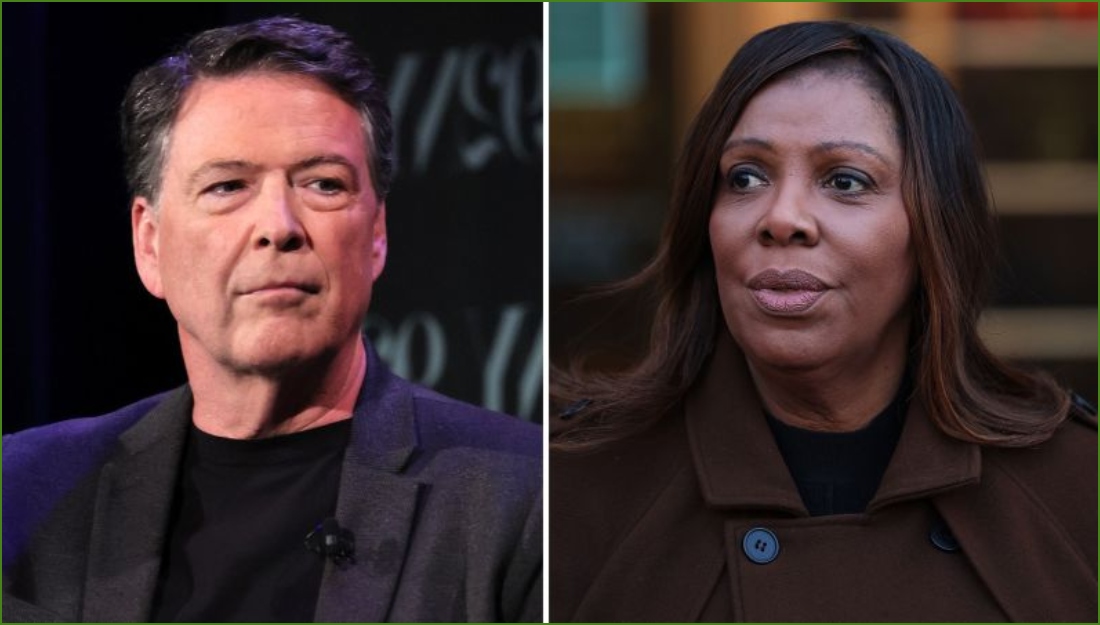
The United States Department of Justice (DOJ) has filed an appeal challenging a federal judge’s decision that dismissed criminal charges against New York Attorney General Letitia James and former FBI Director James Comey, reopening a high-stakes legal battle centered on constitutional limits to prosecutorial authority.
At the heart of the dispute is the legality of the appointment of Lindsey Halligan as Interim U.S. Attorney for the Eastern District of Virginia. In a sweeping ruling issued in November, Senior U.S. District Judge Cameron McGowan Currie, sitting in the Alexandria Division, found that Halligan’s appointment violated both 28 U.S.C. § 546—the federal statute governing interim U.S. attorneys—and the Appointments Clause of the U.S. Constitution.
In her order dismissing the indictments, Judge McGowan Currie wrote:
“All actions flowing from Ms. Halligan’s defective appointment, including securing and signing Mr. Comey’s indictment, were unlawful exercises of executive power and are hereby set aside.”
The ruling invalidated the indictments against Comey and James in their entirety, not on the merits of the alleged conduct, but on constitutional and statutory grounds—an outcome that has triggered serious institutional and legal questions about the DOJ’s internal appointment processes.
Failed Attempts to Revive the Case
Following the dismissals, federal prosecutors attempted to revive the case against Letitia James through alternative legal avenues. According to court records, the DOJ made two unsuccessful attempts to secure new indictments using out-of-state federal prosecutors. A third attempt—alleging a new felony count of making false statements to a financial institution—also collapsed when a federal grand jury returned a “no true bill,” refusing to indict.
In a further setback for prosecutors, the government moved to seal the grand jury record after the refusal to indict. U.S. Magistrate Judge William B. Porter denied that request, allowing the rejection to remain part of the public record.
James’ attorney, Abbe Lowell, sharply criticised the DOJ’s handling of the case.
“This unprecedented rejection makes even clearer that this case should never have seen the light of day,” Lowell said. “This case already has been a stain on this Department’s reputation and raises troubling questions about its integrity.”
Allegations Against James and Comey
The original charges against Letitia James included bank fraud and making false statements to a financial institution, stemming from allegations that she purchased a property in Norfolk, Virginia, and misrepresented it as a second home rather than an investment rental in order to obtain more favourable mortgage terms. James has consistently denied wrongdoing.
James Comey, meanwhile, had been indicted on charges of lying to Congress during a 2020 congressional hearing. However, the case against him faced a critical timing issue. The five-year statute of limitations expired just days after his indictment was filed—further complicating the government’s ability to pursue the case even if the dismissal were overturned.
Constitutional Stakes and DOJ Appeal
The DOJ’s appeal seeks to overturn Judge McGowan Currie’s ruling and reinstate the indictments, arguing that the dismissal overreached and that Halligan’s appointment was lawful or, at minimum, should not invalidate subsequent prosecutorial actions.
Legal analysts note that the appeal raises significant constitutional questions, particularly about the Appointments Clause, which requires certain federal officers to be appointed by the president and confirmed by the Senate, or properly designated under statutory authority.
“If the lower court ruling stands,” one former federal prosecutor said, “it could have ripple effects beyond this case, potentially calling into question actions taken by improperly appointed interim U.S. attorneys in other jurisdictions.”
Broader Implications
The case arrives at a time of heightened scrutiny of the DOJ’s independence and adherence to constitutional norms. Critics argue that repeated failed indictments, grand jury rejections, and procedural missteps risk undermining public confidence in federal law enforcement.
Supporters of the appeal, however, maintain that allowing dismissals based solely on appointment defects could encourage strategic litigation aimed at derailing prosecutions on technical grounds rather than factual innocence.
As the appeal moves forward, federal appellate judges will be tasked with balancing constitutional safeguards against the practical functioning of the justice system—an outcome that could shape future prosecutions and executive branch appointments nationwide.