

The U.S. Department of Justice has begun releasing a long-anticipated cache of documents related to Jeffrey Epstein, the disgraced financier who died by suicide in a New York jail in 2019 while awaiting trial on federal sex-trafficking charges.
Friday’s disclosure marks the first wave of several expected document releases under the Epstein Files Transparency Act, which President Donald Trump signed into law in November. The legislation requires the DOJ to make public records connected to Epstein and his convicted associate, Ghislaine Maxwell, subject to redactions required by law.
What Has Been Released So Far
The documents published to date include thousands of images, evidence photographs, and investigative materials, many of them newly digitized. On December 19, the DOJ quietly added a fifth dataset to the release, signaling that additional material may be uploaded at any time.
The latest batch largely consists of photographs of evidence collected during federal investigations, including images of chain-of-custody envelopes from 2009, sealed evidence boxes, and folders marked with official evidence tape. Other photos appear to document interiors of Epstein’s Manhattan townhouse, including his bedroom, wall art, and unusual decorative items seized by investigators.
The DOJ has warned that the archive contains duplicates, heavily redacted documents, and materials whose context may be difficult to determine without accompanying investigative notes.
Famous Names Appear — With Caveats

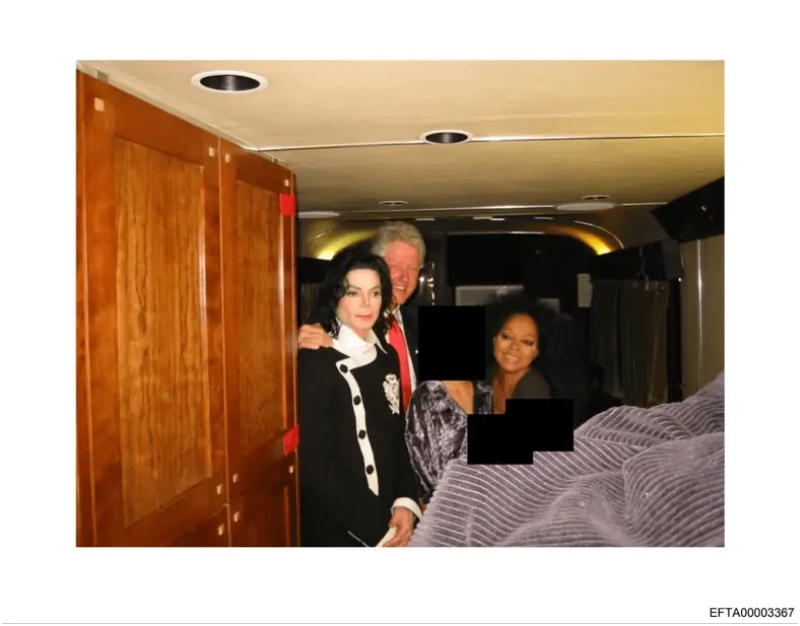
Among the most closely scrutinized elements of the release are photographs showing Epstein in social settings with a range of wealthy and powerful figures, including former U.S. President Bill Clinton, Rolling Stones frontman Mick Jagger, actor Kevin Spacey, pop icon Michael Jackson, and singer Diana Ross.
Federal officials and legal experts have emphasized that appearing in the files or photographs does not imply wrongdoing. In many cases, the images lack dates or contextual details explaining the nature of the encounters.
Clinton, who has long acknowledged knowing Epstein and traveling on his private plane in the past, appears in multiple photographs, including some alongside Maxwell and other high-profile individuals. Spacey, who has faced sexual misconduct allegations unrelated to Epstein but was acquitted in jury trials in both the U.S. and the U.K., said earlier this year that he welcomed the release of the files, stating that “the truth can’t come soon enough.”
Ghislaine Maxwell Prominently Featured

Maxwell, Epstein’s longtime associate and former romantic partner, features heavily throughout the released materials. The files include photos of the pair traveling together and images of Maxwell dressed in various outfits, underscoring her central role in Epstein’s social and logistical network.
Maxwell is currently serving a 20-year federal prison sentence in Texas after being convicted in 2021 for her role in facilitating Epstein’s sex-trafficking operation.
A Massive Archive Still Under Review
The Epstein files archive is divided into several sections, including court records, DOJ disclosures, Freedom of Information Act (FOIA) responses, and materials released by the U.S. House Committee on Oversight and Government Reform. While the site includes a search function, the DOJ cautions that results may be unreliable due to the formatting and volume of the documents.
Public access has been hampered by heavy traffic. The DOJ implemented a Ticketmaster-style digital queue, where users are placed in line to access the database, though queue slots expire after 10 minutes, causing frustration among journalists and members of the public.
What Comes Next
Deputy Attorney General Todd Blanche confirmed that the department expects to release hundreds of thousands of documents in total, including photographs, digital records, and investigative materials seized during FBI searches of Epstein’s properties in New York and the U.S. Virgin Islands. Those searches yielded more than 70 electronic devices, financial records, and storage media that form the core of the Epstein archive.
Victims’ advocates say the disclosures, while incomplete, represent a step toward long-demanded transparency — both about Epstein’s powerful social circle and about how law enforcement handled his case over decades.
The DOJ has stated that additional responsive documents will be added to the archive as they are identified and processed in compliance with the law.