
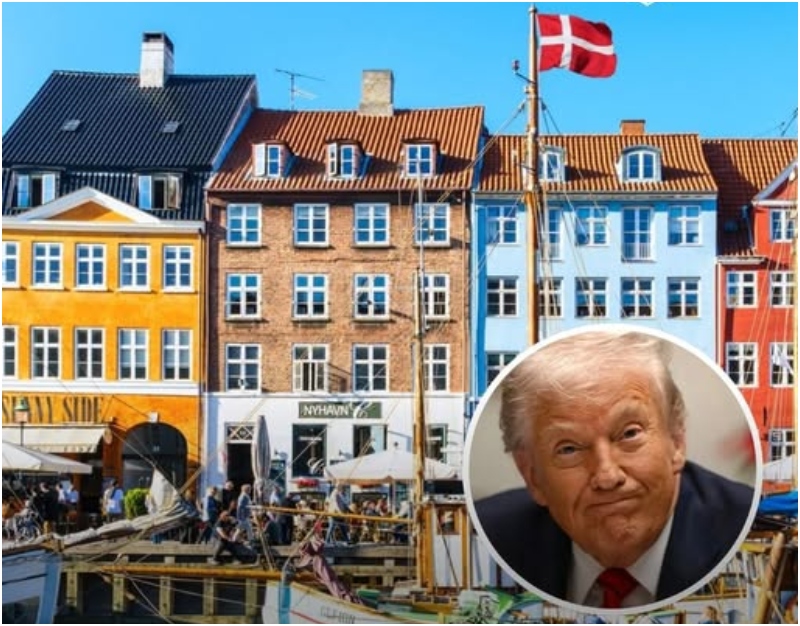
Denmark has, for the first time, formally identified the United States as a ‘potential security concern‘, marking a significant development in transatlantic relations and raising legal and strategic questions about alliance obligations within NATO.
The assessment appears in a newly released annual threat report by the Danish Defence Intelligence Service (DDIS), which warns that the U.S. increasingly uses its economic power and coercive leverage to advance national interests and “no longer rules out the use of military force, even against allies.”
The report situates the warning within a broader global trend in which major powers are prioritising unilateral interests over collective security norms. According to the DDIS, “great powers increasingly prioritise their own interests and use force to achieve their goals,” a shift that challenges long-standing assumptions underpinning international law, alliance solidarity, and multilateral defence arrangements.
NATO Commitments Under Strain
While Russia and China remain the primary strategic threats identified in the report, Denmark’s inclusion of the U.S.—its closest NATO ally—represents a notable recalibration of risk assessment. The intelligence service cautions that the military threat from Russia to NATO is expected to increase, a danger exacerbated by “uncertainty about the role of the United States as a guarantor of Europe’s security.”
From a legal perspective, the warning raises questions about the durability of Article 5 of the NATO Treaty, which commits members to collective defence. Any perceived weakening of U.S. commitment to European security could have profound implications for alliance law, defence planning, and international obligations.
Greenland and Sovereignty Concerns
Relations between Copenhagen and Washington became strained earlier this year after U.S. President Donald Trump publicly expressed interest in taking control of Greenland, an autonomous Arctic territory that remains part of the Kingdom of Denmark under international law.
Although the proposal has not resurfaced in recent months, Danish officials interpreted it as a signal that the U.S. was prepared to challenge long-established norms of sovereignty among allies. Greenland’s strategic location and natural resources make it central to Arctic security, an area governed by overlapping international legal regimes.
Diverging Strategic Priorities
The report also points to growing transatlantic divergence exposed during recent Ukraine peace talks and reinforced by the Trump administration’s newly released national security strategy, which adopts a markedly more confrontational stance toward Europe.
According to the DDIS, Russia may exploit these tensions by leveraging Washington’s desire for a rapid end to the Ukraine war to sow division between the U.S. and Europe, further complicating NATO cohesion and European security law frameworks.
CNN reported that it has contacted the U.S. Embassy in Copenhagen and the Office of the Director of National Intelligence in Washington for comment, but no official response had been issued at the time of publication.
Legal and Strategic Implications
For legal scholars and security analysts, Denmark’s assessment underscores a shifting international order where alliance relationships—once assumed stable—are increasingly subject to political unpredictability.
The report suggests that even treaty-bound partners are now evaluated through a national security lens traditionally reserved for rivals.
As Europe reassesses its defence posture, the Danish report adds momentum to debates over strategic autonomy, collective security law, and the future legal architecture of NATO in an era of intensifying great-power competition.