
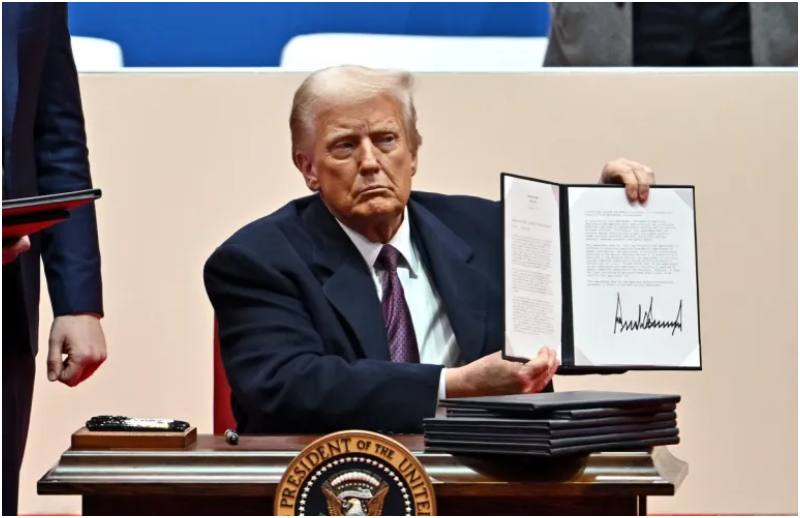
In a move with far-reaching legal and regulatory implications, U.S. President Donald Trump has signed an executive order directing the reclassification of marijuana under federal law, removing it from the most restrictive category of controlled substances.
The order requires cannabis to be reclassified from Schedule I to Schedule III under the Controlled Substances Act (CSA), marking one of the most significant shifts in U.S. drug policy in decades.
What the Reclassification Means
Under federal law, Schedule I substances are defined as drugs with no currently accepted medical use and a high potential for abuse. Marijuana has been listed in this category alongside heroin and LSD for more than half a century.
By contrast, Schedule III substances are defined by the Drug Enforcement Administration (DEA) as drugs with a “moderate to low potential for physical and psychological dependence.” Examples include Tylenol with codeine, ketamine, and testosterone.
The reclassification does not legalize marijuana for recreational use nationwide, nor does it override state-level prohibitions. However, it carries substantial legal consequences:
- Federal health agencies, including the FDA, are now permitted to conduct and authorize broader scientific research into cannabis.
- Medical use restrictions are eased, potentially accelerating approval pathways for cannabis-based therapies.
- Criminal justice exposure is reduced, as Schedule III substances are subject to less severe penalties than Schedule I drugs.
- Tax and regulatory burdens on state-legal cannabis businesses may shift, as certain federal prohibitions tied to Schedule I status could be revisited.
A Historic Shift in Federal Drug Policy
Legal analysts describe the order as historic because it directly challenges the long-standing federal position that cannabis has no medical value—a position increasingly at odds with scientific research and state legislation.
More than two-thirds of U.S. states have legalized marijuana in some form, either for medical or recreational use. Yet federal classification has remained unchanged, creating a persistent conflict between state and federal law.
The executive order instructs federal agencies to align marijuana’s classification with current medical understanding and regulatory practice, a step that both conservative and progressive reform advocates have called for over many years.
Public Opinion and Political Context
According to recent national polling, approximately 64% of U.S. adults believe marijuana use should be legal, reflecting a major shift in public sentiment. While the executive order stops short of full legalization, it is widely seen as moving federal policy closer to public consensus.
From a legal standpoint, the decision underscores the growing use of executive authority to reshape regulatory frameworks where congressional action has stalled.
What Comes Next
The reclassification process will require implementation by the DEA, coordination with the Department of Health and Human Services, and updated regulatory guidance for enforcement agencies and medical researchers.
Legal experts caution that while the executive order sets policy direction, its practical impact will depend on how swiftly and consistently federal agencies act—and whether future administrations maintain or reverse course.
For now, the shift of marijuana to Schedule III represents a fundamental change in how U.S. law views cannabis, opening the door to expanded research, medical integration, and continued debate over full federal legalization.