
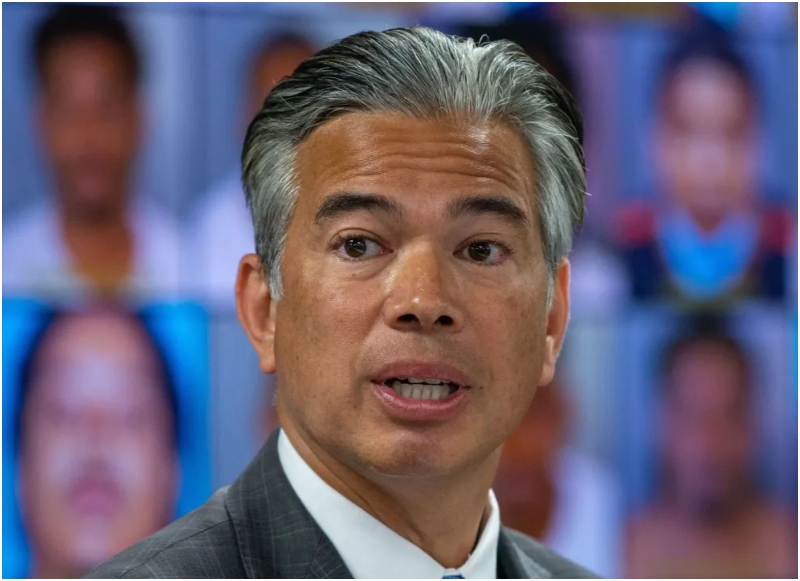
California Attorney General Rob Bonta, leading a coalition of 20 state attorneys general, filed a lawsuit Tuesday December 9, 2025, challenging the Trump Administration’s unprecedented $100,000 fee on new H-1B visa petitions.
The lawsuit claims the policy is unlawful, bypassing required rulemaking procedures and exceeding the authority granted to the executive branch under the Administrative Procedure Act (APA).
H-1B visas allow U.S. employers to hire highly skilled foreign workers in specialty occupations such as healthcare, research, and education—fields that help address nationwide labor shortages. The new fee, Attorney General Bonta and his coalition argue, would create an extraordinary financial barrier for employers, particularly public sector and non-profit institutions that cannot absorb such costs.
“As the world’s fourth largest economy, California knows that when skilled talent from around the world joins our workforce, it drives our state forward,” Bonta said in a statement. “President Trump’s illegal $100,000 H-1B visa fee creates unnecessary—and illegal—financial burdens on California public employers and other providers of vital services, exacerbating labor shortages in key sectors.”
The lawsuit contends that the fee undermines the purpose of the H-1B program, which Congress has carefully structured to meet employer labor needs while protecting American workers. Historically, H-1B visa fees have ranged between $960 and $7,595. The Trump Administration’s $100,000 fee, by contrast, far exceeds the actual cost of processing petitions and could be applied selectively, raising concerns of potential bias.
The impact of the fee would be significant. In the education sector, nearly 30,000 H-1B visa holders are employed as teachers in critical fields such as special education, science, foreign languages, and ESL programs. Higher education institutions also rely heavily on H-1B workers to support research and instruction. Similarly, hospitals and healthcare centers depend on foreign-trained physicians, surgeons, and nurses to fill staffing gaps, particularly in underserved areas. The United States is projected to face a shortfall of 86,000 physicians by 2036.
The coalition of attorneys general filing the lawsuit includes officials from Massachusetts, Arizona, Colorado, Connecticut, Delaware, Hawaii, Illinois, Maryland, Michigan, Minnesota, Nevada, North Carolina, New Jersey, New York, Oregon, Rhode Island, Vermont, Washington, and Wisconsin. They argue the fee violates both the APA and the U.S. Constitution and threatens the provision of essential public services nationwide.
The H-1B program remains a critical tool for addressing labor shortages in key sectors, and the lawsuit signals a major legal challenge to what critics call an overreach by the Trump Administration.