
The helicopter blades thrummed like a heartbeat over the Caribbean as U.S. Coast Guard teams rappelled onto the deck of the Skipper, a hulking tanker laden with 1.8 million barrels of Venezuelan crude.
No shots fired, no resistance—just a quiet handover in international waters that suddenly feels anything but neutral. For the 20 crew members aboard, it was a surreal interruption to a routine voyage from Venezuela’s Jose port toward Cuba. For the Trump administration, it was the latest salvo in a high-stakes showdown with Nicolás Maduro’s regime, one that’s already claimed dozens of lives and now risks pulling the U.S. deeper into Latin America’s powder keg.
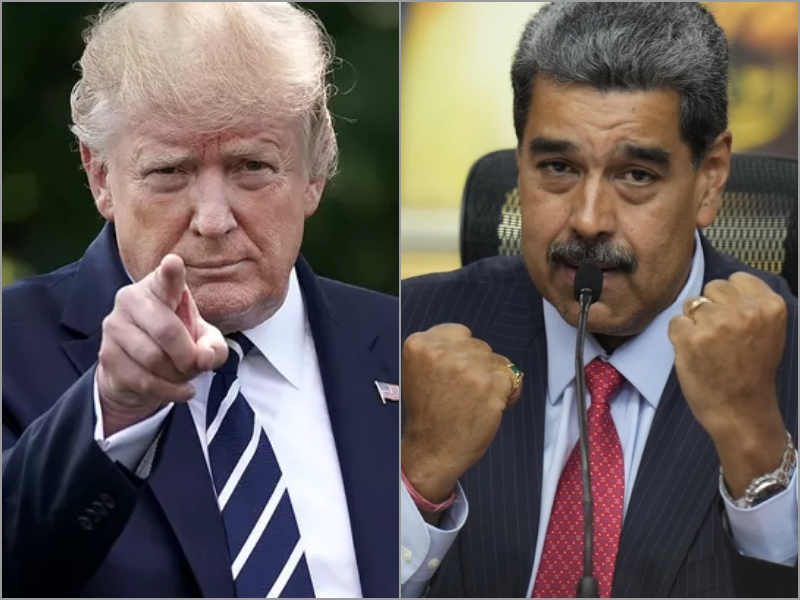
President Donald Trump broke the news himself during a White House roundtable, his voice carrying that familiar mix of bravado and vagueness: “We’ve just seized a tanker on the coast of Venezuela—large tanker, very large, the largest one ever seized, actually.”
He shrugged off questions about the cargo’s fate with a casual, “We keep it, I guess,” before hinting at more to come: “Other things are happening.”
Attorney General Pam Bondi filled in the blanks on X, confirming the FBI, Homeland Security Investigations, and Coast Guard—backed by Pentagon muscle—had executed a seizure warrant. The Skipper, she said, was no innocent freighter; it had spent years ferrying sanctioned oil in a shadowy network linking Venezuela to Iran, allegedly bankrolling foreign terrorist groups. Satellite data backs her up: The vessel loaded Merey heavy crude last week, offloaded a chunk near Curaçao to another ship bound for Cuba, then tried to ghost its location before U.S. forces locked on.
From Caracas, the response was pure fire. Foreign Minister Yván Gil Pinto branded it “a blatant theft and an act of international piracy,” while Interior Minister Diosdado Cabello went further, slamming the U.S. as “murderers, thieves, pirates.” The government statement cut deeper, accusing Washington of a “deliberate plan to plunder our energy resources”—a raw nerve in a country where oil props up 95% of exports, yet leaves millions scraping by amid hyperinflation and blackouts.
Maduro himself, rallying supporters in Caracas, didn’t name the tanker but urged Venezuelans to arm up like “warriors” against the “North American empire.” It’s rhetoric that’s echoed through Venezuela’s crisis for years, but today it lands with the weight of potential reprisal.
This isn’t happening in a vacuum.
Since September, Operation Southern Spear—a Trump-ordered blitz led by Joint Task Force Southern Spear and U.S. Southern Command—has sunk 23 alleged drug boats, killing 84 people in strikes the White House ties to narcoterrorists flooding American streets with fentanyl and coke. The buildup is staggering: 15,000 troops, the USS Gerald R. Ford carrier strike group prowling just miles from Venezuelan shores, robotic drones scouting high-risk zones. Defense Secretary Pete Hegseth calls it defending “America’s neighborhood” from poisons killing 100,000 Americans a year. Trump frames it as personal: Maduro’s charged with narco-terrorism, a $50 million bounty on his head. But critics—and there are plenty—see a regime-change play dressed in counter-narcotics drag, echoing the 2019 “maximum pressure” campaign that starved Venezuela’s economy without toppling its leader.
Markets felt the jolt immediately. Brent crude spiked 1.15% to $62.65 a barrel as traders eyed tighter global supplies; if shippers balk at Venezuelan runs fearing more seizures, it could jack up gas prices at pumps from Miami to Seattle. More seizures are in the pipeline, U.S. officials whisper, part of a strategy to choke PDVSA’s lifelines to allies like China and Russia. CBS reports Trump’s eyeing land strikes next, a line-crosser that could drag in Iran or spark refugee waves crashing against Florida’s keys.
Trump’s right that drugs are a killer; fentanyl’s ravaging Rust Belt towns. Yet naval historian Vincent P. O’Hara nails the rub: Shutting down Venezuela’s seas doesn’t just hurt cartels—it guts an economy, breeds desperation, and funnels more migrants north.
We’re not talking abstract policy; we’re talking kids orphaned by airstrikes, moms crossing Darién gaps with babies on their backs. If this spirals—and signs point yes—Congress needs to haul Hegseth in, not rubber-stamp another forever war in our backyard. Diplomacy’s messy, but it’s cheaper than carrier groups and body bags.
As the Skipper steams toward an uncertain U.S. port, one thing’s clear: Maduro’s not blinking, Trump’s not backing down, and the Caribbean’s turning into a tinderbox.
For Venezuelans caught in the crossfire and Americans watching gas needles climb, the real question isn’t who owns the oil—it’s who pays when the sparks fly.