
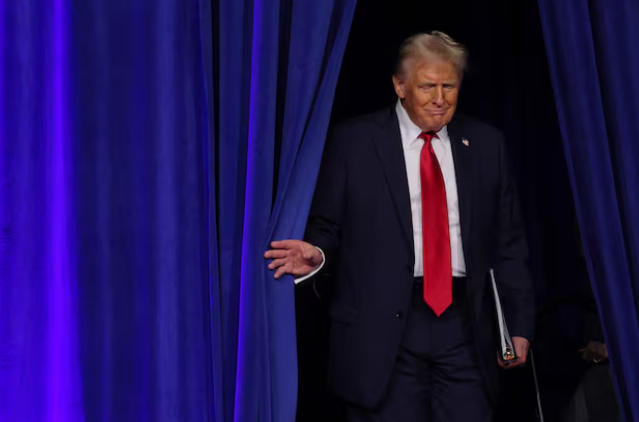
Donald Trump is heading into the next election cycle facing a once-unfamiliar political reality: his support is slipping, not only among independents but also among men, particularly white, college-educated men who once formed a reliable core of his coalition.
A New York Times analysis of public polling released Friday shows a steady downturn in the former president’s standing. Trump’s approval sits at 42%, with 55% disapproval, marking several weeks of decline driven largely by frustrations over the economy and immigration.
Economic Discontent Is Driving the Slide
Across surveys, voters are increasingly sour on Trump’s handling of the economy. Cost-of-living concerns are especially damaging:
- Only 26% of respondents believe he is doing a good job managing inflation and living costs, according to Reuters/Ipsos.
- Approval of his economic performance among Republicans has dipped—from 82% in July to 75% in November, per Marquette University.
That decline within his own party is notable. Economic stewardship has long been one of Trump’s strongest selling points among conservatives. Now, even loyal GOP voters appear uneasy.

A Fracture Among Men and Independents
Fox News polling found Trump’s approval among white, college-educated men fell from 47% in June to 40%—a significant drop within a demographic that helped propel his 2016 victory.
Independents are also breaking away. The Economist/YouGov poll shows just 38% approval, marking seven consecutive weeks with Trump’s net approval at –15 or worse. During Trump’s first term, he never sustained a negative streak this deep for more than three weeks.
Comparisons Paint an Even Starker Picture
At this point in his presidency, Joe Biden’s net approval was –9. Trump’s during this equivalent period in his first term was –15. Today, Trump is performing worse than both benchmarks.
NPR/PBS/Marist polling shows:
- Approval down to 39%
- Disapproval up to 56%
And the same survey shows a troubling sign for Republicans heading into the midterms: Democrats hold a 55%–41% advantage in generic ballot preference.
A Cascade of Low Marks
The trend repeats across major polling outfits:
- Reuters/Ipsos: Trump at 38% approval, a second-term low
- CNN/SSRS: 37% approval, matching some of Trump’s lowest early-term numbers
- Morning Consult: 44% approval, tied for his weakest showing this term
- Harvard CAPS/Harris: 44% approval, with all nine issue-based approval categories falling below 50%
Even on topics Trump has traditionally polled stronger on—crime and immigration—his ratings are slipping.
Mistrust Over Government Secrecy Adds Fuel
One striking data point:
Seventy percent of adults believe the government is hiding the client list associated with Jeffrey Epstein, and 61% believe it is hiding information about Epstein’s death. Only 20% approve of Trump’s handling of the matter, according to Reuters/Ipsos.
Though bipartisan, that mistrust contributes to a broader environment of political skepticism that appears to be hurting incumbents, including Trump.
A Disconnect Between Rhetoric and Reality
Despite the numbers, Trump insists publicly that his polling is strong, telling reporters this week that he has “the highest numbers I ever had.” But the data—across network polls, university surveys, and national polling partnerships—tell a different story.
What’s emerging is not a single bad poll, but a pattern, one that stretches from mid-October into December:
Trump is steadily losing ground, and the erosion is broad rather than isolated.
The Bigger Picture
For Democrats, these numbers suggest opportunity. For Republicans, they signal a potential turnout problem—and a messaging crisis. Trump’s political dominance has often relied on projecting strength. Sustained negative polling undercuts that image.
As the 2026 midterms and a potential 2028 run loom, Trump isn’t just battling Democrats, the economy, or the media narrative. He’s battling political gravity.
And right now, gravity is winning.