
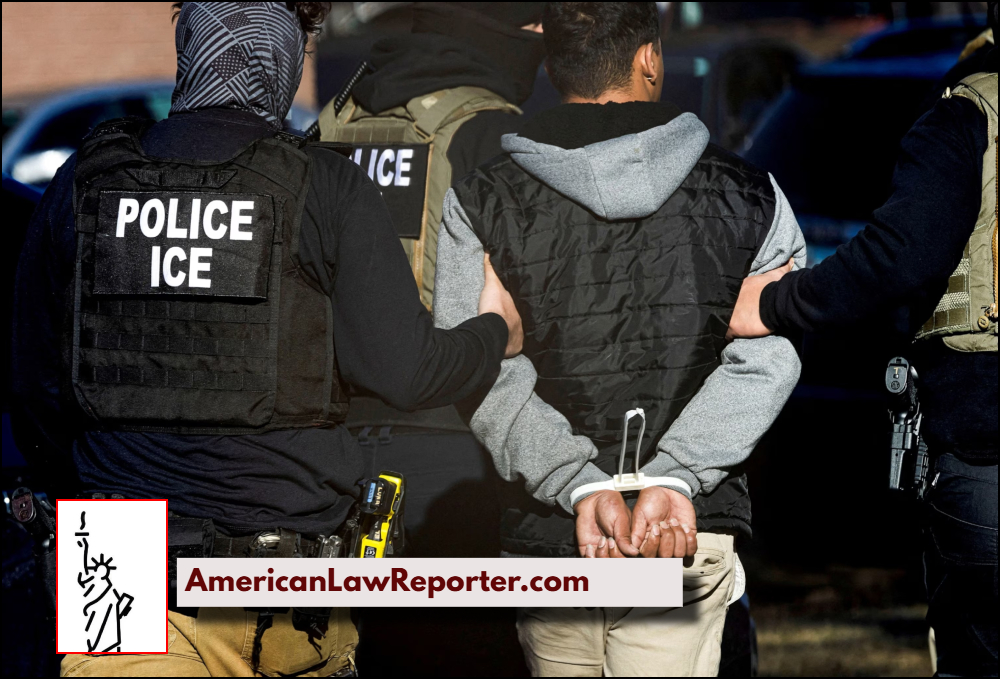
The U.S. Supreme Court has granted the Trump administration’s request to lift a lower court order that restricted immigration enforcement operations in Los Angeles, clearing the way for federal agents to resume large-scale immigration stops in Southern California.
The Court’s decision, issued Monday, September, 8, 2025, freezes a temporary restraining order entered by U.S. District Judge Maame Ewusi-Mensah Frimpong, who had ruled that federal immigration officers could not stop individuals without reasonable suspicion that they were in the country unlawfully. Her injunction specifically barred reliance on factors such as race, language, occupation, or location as the sole basis for detention.
The Justice Department, led by Solicitor General D. John Sauer, argued the injunction created a “straitjacket on law-enforcement efforts” and exposed agents to contempt proceedings for conducting routine investigative stops. After the 9th U.S. Circuit Court of Appeals declined to fully suspend the order, the administration sought emergency relief from the Supreme Court.
The ruling reflects a divided Court. Justices Sonia Sotomayor, Elena Kagan, and Ketanji Brown Jackson dissented sharply. Writing for the minority, Sotomayor warned:
“We should not have to live in a country where the Government can seize anyone who looks Latino, speaks Spanish, and appears to work a low wage job. Rather than stand idly by while our constitutional freedoms are lost, I dissent.”
The Department of Homeland Security hailed the decision as a win, stating it will allow agents to continue targeting undocumented immigrants accused of serious crimes. Los Angeles Mayor Karen Bass, however, condemned the order, warning it would “tear apart working families” and sow fear in immigrant communities.
The Legal Challenge
The case arose from the arrest of three undocumented men in Pasadena who were picked up during a workplace enforcement operation at a donut shop. They, along with U.S. citizens and several advocacy organizations, sued, alleging that Immigration and Customs Enforcement (ICE) agents were conducting indiscriminate raids and violating the Fourth Amendment’s protections against unreasonable searches and seizures.
Judge Frimpong, in issuing her restraining order, cited a “mountain of evidence” of roving patrols indiscriminately detaining individuals without individualized suspicion. She warned that reliance on broad demographic factors such as race and language risked unconstitutional “dragnet” practices.
Lawyers for the plaintiffs argued before the Supreme Court that the administration’s tactics inflicted “immeasurable harm” on U.S. citizens and lawful residents wrongly targeted.
“The government’s extraordinary claim that it can get very close to justifying a seizure of any Latino person in the Central District…is anathema to the Constitution,” they wrote.
Broader Implications
The dispute highlights ongoing tensions between federal immigration enforcement priorities and constitutional civil liberties. With Los Angeles home to nearly 20 million people, including an estimated 2 million undocumented immigrants, the ruling has immediate and far-reaching consequences.
For the Trump administration, the decision represents judicial support for its mass deportation campaign, which it has called the largest in U.S. history. For critics, the Court’s action raises fears of racial profiling, arbitrary detentions, and erosion of Fourth Amendment protections.
The litigation will now proceed in the lower courts, but for the time being, immigration agents may resume broad enforcement operations across Southern California.